
Say Cheese to Detect Parkinson’s
Our latest paper in NEJM AI shows artificial intelligence can detect Parkinson’s disease with 88% accuracy using nothing more than a smartphone video of someone smiling.
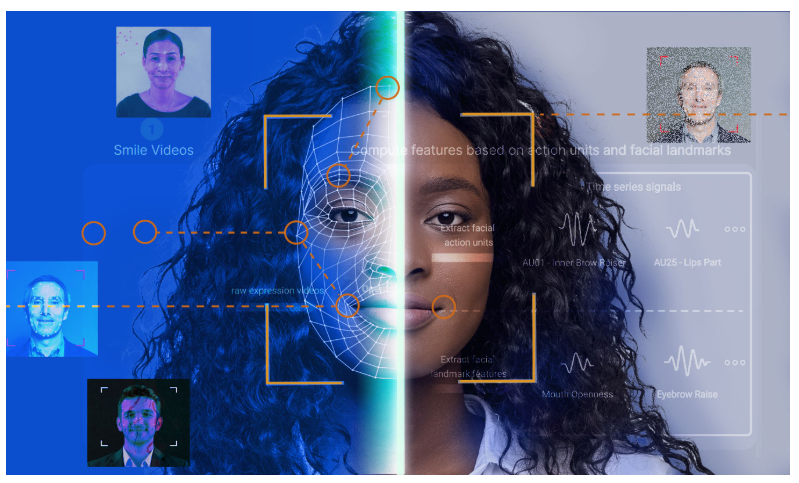
What if diagnosing Parkinson’s disease could be as simple as recording a smile? Our latest research, published in NEJM AI, demonstrates exactly that—we’ve developed an AI system that can detect Parkinson’s disease by analyzing facial expressions with remarkable accuracy using just a smartphone.
This work represents a collaborative effort between researchers at the University of Rochester, co-led by Adnan, Islam, and colleagues from the ROC HCI lab and the Department of Neurology, along with collaborating institutions worldwide.
The Power of a Simple Smile
We analyzed smile videos from approximately 1,400 participants worldwide and achieved roughly 88% accuracy in detecting Parkinson’s by identifying subtle facial cues invisible to the human eye. Participants only needed to record themselves smiling using their phone’s camera.
Why This Matters
Our work reveals that smiling serves a function beyond emotional expression—it’s a diagnostic window. Parkinson’s often first manifests in facial expressions, creating subtle changes that precede obvious motor symptoms. While these early signs go unnoticed during routine exams, our AI detects these patterns with impressive precision.
Five Key Implications
Redefining diagnostic tools: Facial expressions become quantifiable biomarkers rather than subjective observations.
Expanding access: Anyone with a smartphone can potentially access Parkinson’s screening, regardless of location.
Optimizing resources: Fast, non-invasive, and affordable screening ideal for population health.
Addressing equity: This technology could reduce disparities in neurological care access.
Accelerating diagnosis: Our AI serves as an effective triage tool, getting patients to specialists faster.
The Bigger Picture
This research represents a shift toward accessible, scalable healthcare solutions. By extracting health insights from simple interactions—like smiling for a camera—we’re moving toward sophisticated medical screening that can happen anywhere, anytime.
The journey from research to clinical implementation requires validation and regulatory consideration, but the potential is clear: transforming neurological diagnosis through human-computer interaction.
This research was conducted through a collaboration between the University of Rochester’s ROC HCI lab, Department of Computer Science, and Department of Neurology, along with international research partners. Special thanks to all study participants who made this work possible.
Read our full study: AI-Based Facial Expression Analysis for Parkinson’s Disease Detection published in NEJM AI.